
What Software Engineering Teams Need to Know
Over the past few years, generative AI has evolved from an experimental technology into an essential component of modern software engineering. Developers now rely on Large Language Models (LLMs) to write code, review pull requests, generate documentation, automate tests, analyze logs, and even assist with software architecture decisions.
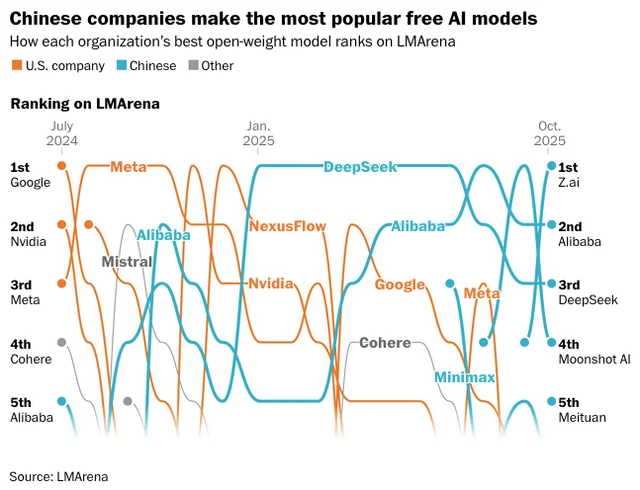
Until recently, the market was largely dominated by American AI companies such as OpenAI, Anthropic, Google, and Meta. Today, however, another group of competitors has emerged at an impressive pace. Companies including Moonshot AI (Kimi), Alibaba (Qwen), DeepSeek, Zhipu AI (GLM), and MiniMax are introducing models that are increasingly capable, more affordable in many scenarios, and, in some cases, openly available.
This raises an important question for engineering leaders:
Are Chinese AI models becoming serious competitors to American LLMs, and will they change the way software engineering teams work?
The short answer is yes, but with important nuances.
Chinese models are no longer experimental alternatives. They have become credible options for many software engineering tasks, particularly code generation, documentation, knowledge retrieval, automated testing, and large-context analysis. At the same time, American models continue to lead in several areas, including enterprise ecosystem maturity, governance, security certifications, and advanced reasoning.
Rather than replacing one another, these models are creating a far more competitive AI landscape. For software engineering teams, this competition is likely to bring lower costs, faster innovation, and greater flexibility in choosing the right model for each task.
This article explores what has changed, what has not, and what engineering organizations should realistically expect over the next few years.
The AI Landscape Is Changing
Only a few years ago, discussions around enterprise AI were relatively straightforward. Most organizations evaluating generative AI focused on three major providers:
- OpenAI
- Anthropic
Developers typically compared ChatGPT, Claude, and Gemini while occasionally evaluating Meta’s Llama models for self-hosted deployments.
Today, the conversation has become significantly broader.
Engineering teams are increasingly evaluating models such as:
- Kimi
- Qwen
- DeepSeek
- GLM
- MiniMax
These models are no longer discussed solely within academic circles or local developer communities. They now appear in benchmark reports, open-source projects, enterprise evaluations, GitHub repositories, and AI-powered development platforms.
This evolution reflects a broader shift in the AI industry: innovation is no longer driven by a small number of laboratories. Competition has become global.
Timeline of the Modern AI Race
| Year | Major Evolution |
|---|---|
| 2022 | ChatGPT popularizes conversational AI worldwide. |
| 2023 | Claude and Gemini introduce stronger reasoning and enterprise capabilities. |
| 2024 | Open-source models improve rapidly, reducing barriers to AI adoption. |
| 2025 | Chinese AI laboratories release increasingly competitive models for coding, reasoning, and long-context understanding. |
| 2026 | Organizations increasingly evaluate multiple LLM providers instead of relying on a single ecosystem. |
Why Are Chinese AI Models Receiving So Much Attention?
The growing interest in Chinese LLMs is not the result of a single breakthrough. Instead, it reflects several trends converging at the same time.
1. Rapid Technical Progress
Over a relatively short period, Chinese AI laboratories have significantly improved their models across areas such as:
- Source code generation
- Multilingual understanding
- Reasoning
- Retrieval-augmented generation
- Long-context processing
- Agent workflows
These capabilities have made many of their models viable candidates for real engineering work rather than simple demonstrations.
2. Increased Competition
Competition generally benefits users.
The emergence of additional high-performing models encourages faster innovation across the industry. AI companies now compete on multiple dimensions:
- Model quality
- Inference speed
- Pricing
- Context length
- Developer experience
- API capabilities
- Enterprise integrations
As a result, engineering teams have more options than ever before.
3. Cost Optimization
One notable trend is the focus on efficiency.
Several Chinese laboratories emphasize delivering competitive performance while optimizing inference costs. This is particularly attractive for organizations that process millions of tokens daily through AI-assisted development workflows.
Although pricing should never be the only selection criterion, lower operational costs can significantly influence enterprise adoption when model quality remains competitive.
4. Strong Open-Source Momentum
Another important factor is the continued investment in open-source AI.
Many organizations prefer running models within their own infrastructure for reasons such as:
- Data privacy
- Regulatory compliance
- Latency reduction
- Customization
- Cost control
The availability of capable open or openly accessible models broadens deployment options for enterprises that cannot rely exclusively on cloud-hosted proprietary services.
Who Are the Main Chinese AI Players?
The Chinese AI ecosystem is diverse. Each laboratory follows its own strategy rather than pursuing identical objectives.
Moonshot AI – Kimi
Kimi has attracted attention for its strong performance in long-context understanding, software engineering tasks, and developer productivity. Its rapid improvements have made it one of the most discussed Chinese models among international developers.
Its strengths often include:
- Large document understanding
- Technical documentation analysis
- Software engineering assistance
- Coding support
- Developer productivity
Alibaba – Qwen
Qwen has become one of the most recognized open-source AI families.
Its ecosystem includes models specialized for:
- Coding
- Reasoning
- Multilingual applications
- Multimodal understanding
Its openness has encouraged experimentation within the developer community.
DeepSeek
DeepSeek gained significant visibility due to its competitive coding and reasoning capabilities.
Many developers appreciate its balance between performance and accessibility, particularly for technical workflows.
Zhipu AI – GLM
GLM focuses on building general-purpose foundation models suitable for enterprise applications.
Its roadmap includes conversational AI, coding assistance, and enterprise AI services.
MiniMax
MiniMax continues to invest in large-scale AI systems targeting both consumer and enterprise applications, contributing to the diversity of China’s AI ecosystem.
Are They Really Competing With GPT, Claude and Gemini?
This is where the discussion requires nuance.
Comparing LLMs solely through benchmark scores often oversimplifies reality.
Engineering teams care about questions such as:
- Can the model understand my codebase?
- Can it generate reliable unit tests?
- Does it integrate with my existing tools?
- Can it explain complex architectures?
- Can it help during incident response?
- Does it reduce developer effort?
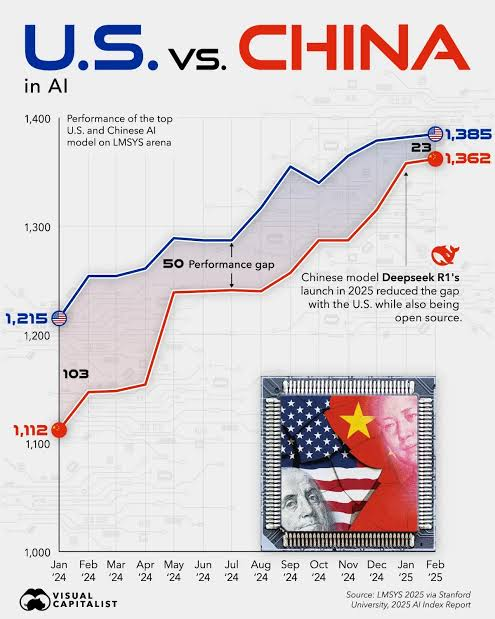
From this perspective, Chinese AI models have become genuine competitors.
Not because they outperform every American model in every benchmark—but because they can successfully perform many of the same engineering tasks.
Comparison Across Common Engineering Tasks
| Engineering Activity | Current Observation |
|---|---|
| Code generation | Several Chinese models now produce high-quality code for common development tasks. |
| Code explanation | Strong performance, especially with well-structured repositories. |
| Documentation generation | Competitive across most major models. |
| Unit test generation | Comparable quality for many languages and frameworks. |
| API documentation | Effective when specifications are well defined. |
| Log analysis | Increasingly capable, particularly with structured logs. |
| Refactoring | Useful for repetitive improvements, though human review remains essential. |
| Software architecture discussions | American frontier models generally retain an advantage on highly complex architectural reasoning. |
The important takeaway is that software engineering productivity depends on the overall workflow—not on benchmark rankings alone.
A model that integrates well into an organization’s tooling, budget, and governance may deliver greater business value than one that scores slightly higher on academic evaluations.
Reality Check
The emergence of Chinese AI models does not mean that OpenAI, Anthropic, or Google are losing relevance.
Instead, it means the AI market is entering a more competitive phase where multiple providers are capable of supporting modern software engineering teams.
For developers, QA engineers, DevOps specialists, and architects, this is ultimately positive news. More competition encourages faster innovation, broader choice, and greater flexibility when selecting AI tools for different engineering challenges.
End of Part 1 — In the next part, we’ll explore how Chinese AI models are impacting software engineering workflows, where American models still maintain clear advantages, why many organizations are adopting multi-model strategies, and what the future of AI competition could look like.