

In modern software development, quality assurance is not a one-time activity–it is a strategic discipline that underpins every stage of the software lifecycle. A well-structured test strategy provides a roadmap for aligning teams, resources, and processes to deliver reliable, high-quality software.
This guide explores in-depth the definition of a test strategy, its essential components, step-by-step implementation, risk management, and planning considerations. Whether you are managing a single project or overseeing multiple product lines, this guide provides a foundation for building a strategy that ensures success.
1. Defining a Test Strategy
A test strategy is a high-level framework that establishes how testing will be performed and ensures alignment with business and technical objectives. Unlike a test plan, which is project-specific, a test strategy focuses on principles, processes, and methodologies that can guide multiple projects.
Objectives of a Test Strategy:
- Establish a clear vision of quality for all stakeholders
- Identify critical business functions and risk-prioritized areas
- Provide consistency in testing processes across projects
- Guide allocation of resources and efforts efficiently
- Serve as a reference point for evaluating testing effectiveness
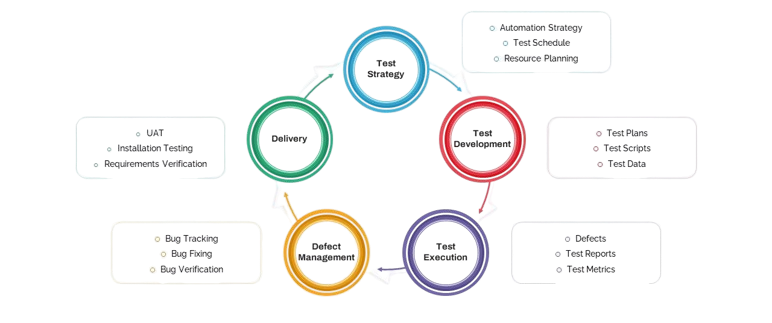
2. Core Components of a Test Strategy
A robust test strategy should address the following key elements:
2.1 Objectives and Goals
- Define measurable quality objectives (defect reduction, risk mitigation, reliability)
- Align testing objectives with business goals (e.g., high availability, user experience, regulatory compliance)
2.2 Scope and Coverage
- Define what will be tested (modules, workflows, integrations)
- Identify what is out of scope to prevent wasted effort
- Consider functional vs. non-functional testing requirements
2.3 Testing Levels and Types
- Unit testing: verify individual components
- Integration testing: validate module interactions
- System testing: end-to-end workflows
- Acceptance testing: ensure business requirements are met
- Non-functional testing: performance, security, usability
2.4 Approach and Methodology
- Define how testing will be conducted (manual, automated, data-driven, risk-based)
- Prioritize tests based on business impact and complexity
- Consider iterative approaches to allow flexibility in changing requirements
2.5 Resources and Responsibilities
- Assign clear roles for QA, developers, business analysts, and stakeholders
- Identify required skill sets and training needs
- Plan for resource allocation and contingency in case of changes
2.6 Risk Assessment and Mitigation
- Identify potential risks (technical, operational, business-critical)
- Prioritize testing effort based on risk level
- Develop mitigation strategies and contingency plans
2.7 Metrics, Reporting, and KPIs
- Define success indicators: coverage, defect density, execution efficiency
- Establish reporting mechanisms to provide transparency to stakeholders
- Include continuous improvement feedback loops
2.8 Entry and Exit Criteria
- Entry: prerequisites for testing activities (environment readiness, code stability)
- Exit: conditions for considering testing complete (coverage achieved, defects resolved, critical risks mitigated)
3. Step-by-Step Implementation Process
- Requirements Analysis: Review functional and non-functional requirements; identify critical business workflows.
- Risk Evaluation: Categorize modules based on complexity, usage frequency, and potential business impact.
- Define Testing Levels and Methodologies: Decide which layers and testing methods apply to each module.
- Resource Planning: Allocate team members, define roles, and schedule tasks.
- Define Metrics and KPIs: Establish measurable goals for quality and efficiency.
- Documentation: Ensure the strategy is clear, comprehensive, and accessible to all stakeholders.
- Review and Continuous Improvement: Update the strategy based on feedback, defects, and lessons learned.
4. Planning and Scheduling Considerations
- Prioritize high-risk modules first to maximize early defect detection
- Schedule testing in alignment with development sprints or releases
- Allocate buffers for exploratory testing and unexpected delays
- Coordinate across teams for integrated testing across modules
5. Challenges in Developing a Test Strategy
- Unclear requirements leading to misaligned testing priorities
- Rapidly changing priorities requiring frequent updates
- Limited resources forcing difficult trade-offs between coverage and efficiency
- Integration complexity in multi-system environments
Mitigation: Maintain iterative reviews, involve stakeholders early, document assumptions and risk management strategies.
6. Benefits of a Well-Defined Strategy
- Consistent approach across projects and teams
- Focused allocation of resources and effort
- Reduced production defects and improved risk management
- Clear communication and stakeholder confidence
- Adaptability to new technologies and evolving business needs
A test strategy is not just documentation–it is a strategic framework that guides all testing activities. By defining its content, following a structured implementation process, and continuously reviewing performance, organizations can ensure efficient, risk-aware, and high-quality software delivery.