
The Reality Most People Still Don’t Understand
The AI revolution is not defined by models.
It is defined by behavioral adaptation.
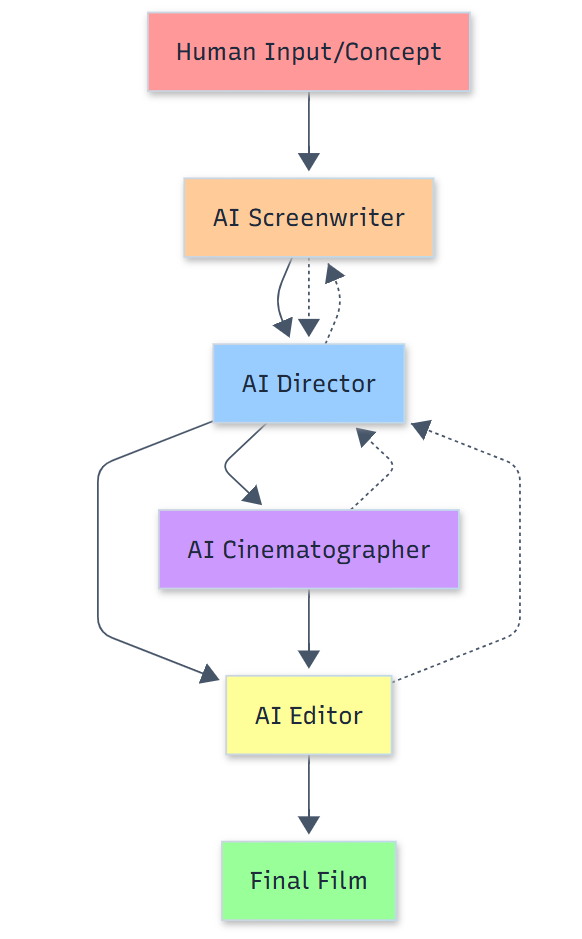
Most professionals still approach AI as a tool. Elite performers treat it as a system layer — something that sits between them and execution.
This distinction creates a widening productivity gap across industries.
In 2026, the defining professional advantage is no longer knowledge.
It is leverage.
And AI is the highest-leverage mechanism ever introduced into knowledge work.
1. The New Law of Professional Value
Historically, value came from skill.
Today, value comes from:
output × leverage
AI is leverage.
A professional who understands this principle can outperform more experienced peers simply by structuring work differently.
This is why junior engineers who master AI orchestration often outperform senior engineers who rely purely on manual expertise.
2. The Elite Operator Model
Top performers no longer operate as workers.
They operate as system designers.
Their workflow looks like this:
- Define objective
- Delegate execution to AI
- Validate output
- Optimize system
- Repeat
They rarely perform the task itself.
This is identical to how CEOs operate companies: they design systems, not tasks.
3. The AI Leverage Pyramid
Professional AI usage follows a hierarchy:
| Layer | Capability | Outcome |
|---|---|---|
| Prompting | Ask AI | Speed |
| Integration | Connect AI | Productivity |
| Automation | Trigger AI | Scalability |
| Orchestration | Chain systems | Multiplication |
| Architecture | Design systems | Dominance |
Most professionals stay at the prompting layer.
True experts operate at the architecture layer.
4. The Cognitive Shift Required
Adopting AI is not technical.
It is psychological.
The biggest obstacle is not learning tools.
It is letting go of manual control.
Professionals who struggle with AI adoption often share one belief:
“If I don’t do it myself, it won’t be done correctly.”
High-impact professionals replace that belief with:
“If a system can do it, I shouldn’t.”
This mindset shift is the single biggest predictor of AI success.
5. The Strategic Career Implication
AI is restructuring job hierarchies.
Previously:
Experience → Authority
Now:
System Thinking → Authority
The fastest rising professionals are those who can:
- design workflows
- connect tools
- automate decisions
- optimize systems
They become force multipliers inside organizations.
6. The Hidden Competitive Curve
AI adoption produces exponential—not linear—advantage.
Why?
Because systems compound.
A single automated workflow saves minutes.
Ten workflows save hours.
Fifty workflows transform output capacity.
This compounding effect is invisible early on, which is why late adopters underestimate early adopters.
7. What Elite AI Users Do Daily
High-level practitioners integrate AI into routine cognitive tasks:
- decision preparation
- research synthesis
- debugging reasoning
- scenario simulation
- strategy drafting
- architecture planning
They are not using AI occasionally.
They are thinking with it continuously.
Final Strategic Insight
AI is not a tool upgrade.
It is a new layer of cognition.
Those who learn to operate at that layer will not just be faster.
They will be operating on an entirely different level of effectiveness.