
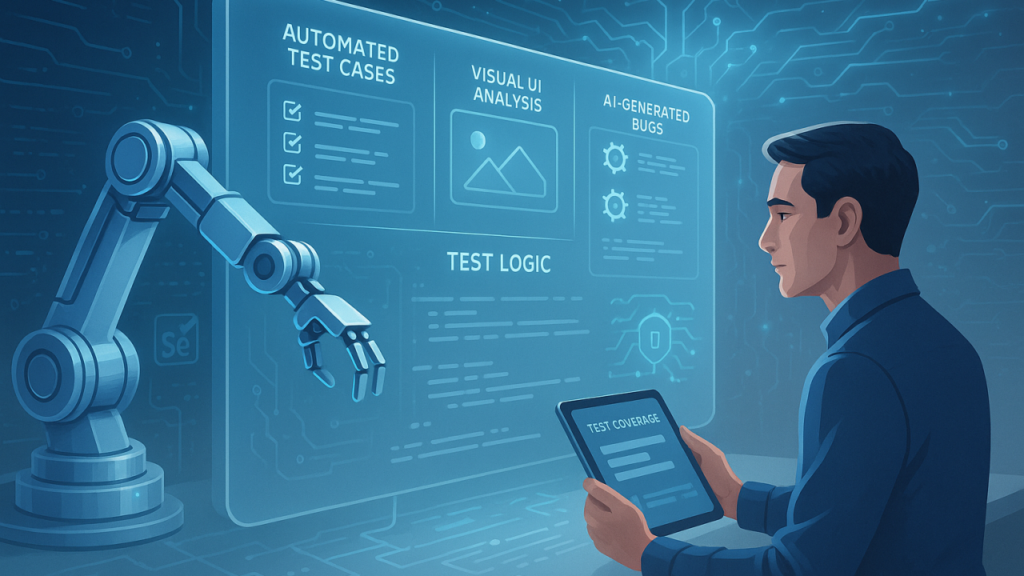
Software testing has evolved dramatically over the past decade.
Applications are now deployed continuously, Agile delivery cycles are shorter than ever, cloud-native architectures are becoming standard, and organizations are under constant pressure to deliver faster while maintaining high quality.
At the same time, automation has become one of the most important pillars of modern software delivery.
Yet despite massive investments in QA automation, many companies still face the same recurring problems:
- unstable regression suites,
- flaky tests,
- growing maintenance costs,
- duplicated automation logic,
- slow pipelines,
- unreliable execution results,
- and low confidence in automated validation.
Ironically, most automation frameworks were initially introduced to solve exactly these issues.
The uncomfortable reality is this:
many traditional automation frameworks were never designed for the speed, complexity, scalability, and continuous evolution of modern Agile enterprises.
As software ecosystems become increasingly dynamic, traditional automation approaches are reaching their operational limits.
This article explores:
- why automation frameworks become difficult to maintain,
- how technical debt silently destroys QA efficiency,
- why tools alone are not the solution,
- how modern QA engineering is evolving,
- and how Artificial Intelligence is beginning to transform the future of software testing.
The Original Promise of Test Automation
When organizations launch automation initiatives, expectations are usually extremely high.
Leadership expects:
- faster releases,
- reduced manual effort,
- better regression coverage,
- increased software quality,
- and more delivery confidence.
Initially, results often look very promising:
- regression execution becomes faster,
- repetitive testing decreases,
- dashboards show increasing coverage,
- delivery appears more efficient.
However, after several months — or sometimes after only a few Agile Program Increments — many teams begin experiencing serious operational difficulties.
The framework slowly becomes:
- harder to maintain,
- more unstable,
- slower to evolve,
- increasingly expensive.
What originally appeared to be a productivity accelerator gradually turns into a delivery bottleneck.
Modern Agile Delivery Has Changed Everything
Traditional automation frameworks were often designed for relatively stable applications.
But modern software ecosystems are radically different.
Today’s applications evolve continuously:
- APIs change frequently,
- microservices evolve independently,
- front-end frameworks update rapidly,
- deployments occur multiple times per day,
- multiple teams develop in parallel,
- infrastructure changes dynamically in cloud environments.
In this reality, automation frameworks must survive continuous change.
The challenge is no longer:
“Can we automate testing?”
The real challenge becomes:
“Can our automation ecosystem remain stable, scalable, and maintainable while the application evolves continuously?”
This is exactly where many organizations begin struggling.
Traditional Automation vs Modern QA Engineering
| Area | Traditional Automation Approach | Modern QA Engineering Approach |
|---|---|---|
| Main Objective | Automate as many tests as possible | Build sustainable and scalable quality ecosystems |
| Focus | Test scripting | Engineering architecture |
| Execution | Mostly local execution | CI/CD and cloud-native execution |
| Framework Design | Monolithic Page Objects | Modular component-based architecture |
| Test Data | Hardcoded or shared | Dynamic and isolated |
| Maintenance Strategy | Reactive fixes | Preventive maintainability |
| Reporting | Basic pass/fail results | Intelligent analytics and observability |
| Scalability | Limited parallelization | Distributed scalable execution |
| Team Mindset | QA automation team | Quality engineering culture |
| AI Usage | Minimal or absent | AI-assisted optimization and analysis |
The Dangerous Obsession With Automation Coverage
One of the biggest mistakes in many automation programs is the obsession with coverage metrics.
Organizations proudly monitor:
- number of automated tests,
- execution counts,
- regression percentages,
- pipeline statistics.
But high coverage does not automatically mean high quality.
Many teams optimize for quantity instead of sustainability.
As pressure increases, engineers begin:
- duplicating automation logic,
- bypassing architecture standards,
- hardcoding synchronization,
- creating fragile locators,
- ignoring maintainability concerns.
Initially, this accelerates delivery.
But over time, the long-term cost becomes enormous.
How Automation Technical Debt Grows Silently
Automation technical debt behaves differently from application technical debt.
Its impact is often invisible at first.
A duplicated method may appear harmless.
A fragile locator may seem manageable.
A hardcoded wait may temporarily “solve the issue.”
But over time, these shortcuts accumulate.
Eventually:
- UI changes break dozens of tests,
- regression suites become unstable,
- debugging time increases dramatically,
- execution reliability decreases,
- maintenance costs explode.
At this stage, automation no longer saves engineering time.
It consumes it.
Main Causes of Automation Framework Instability
| Problem | Typical Root Cause | Business Impact |
|---|---|---|
| Flaky Tests | Poor synchronization | Low trust in automation |
| Frequent Locator Breaks | Fragile XPath/CSS selectors | High maintenance effort |
| Slow Regression Execution | Poor execution optimization | Delayed releases |
| Duplicate Automation Logic | Lack of reusable components | Increased technical debt |
| CI/CD Failures | Environment dependency | Pipeline instability |
| Difficult Onboarding | Weak framework documentation | Reduced team productivity |
| Random Test Failures | Shared test data | Unreliable results |
| Framework Complexity | Weak architecture governance | Reduced scalability |
The Flaky Test Crisis
Few issues damage QA credibility more than flaky tests.
A flaky test is a test that:
- passes randomly,
- fails inconsistently,
- produces unstable results,
- without any actual application defect.
Flaky tests slowly destroy trust in automation.
Once teams stop trusting automated pipelines:
- developers ignore failures,
- manual verification increases,
- release confidence decreases,
- regression suites lose operational value.
Many organizations normalize flaky tests by rerunning pipelines multiple times until results become “green.”
This creates a dangerous illusion of quality.
Signs Your Automation Framework Is Becoming Difficult to Maintain
| Warning Sign | What It Usually Means |
|---|---|
| QA teams spend more time fixing tests than creating value | Technical debt is accumulating |
| Pipelines require frequent reruns | Framework stability is decreasing |
| UI changes break large numbers of tests | Locator strategy is fragile |
| Regression execution time keeps increasing | Scalability problems exist |
| Automation onboarding takes too long | Framework complexity is too high |
| Teams avoid modifying core automation components | Architecture is becoming risky |
| Developers stop trusting pipeline results | Automation credibility is damaged |
| Manual validation increases despite high automation coverage | Automation efficiency is declining |
Why Locator Strategy Matters More Than Most Teams Realize
One of the most underestimated aspects of automation engineering is object identification strategy.
Many frameworks depend excessively on:
- deep XPath chains,
- unstable CSS selectors,
- DOM structure dependencies.
These approaches are extremely fragile.
Every front-end change introduces instability.
As Agile delivery accelerates, locator fragility becomes a major maintenance burden.
Weak vs Strong Locator Strategy
| Weak Locator Strategy | Strong Locator Strategy |
|---|---|
| Deep XPath chains | Stable test IDs |
| Dynamic CSS dependencies | Dedicated automation attributes |
| DOM position-based locators | Semantic identifiers |
| Scattered locator definitions | Centralized locator management |
| UI-dependent logic | Resilient abstraction |
| Hardcoded selectors | Reusable selector libraries |
Why Traditional Page Object Models Often Collapse at Scale
The Page Object Model became highly popular because it improved readability and reuse.
However, many implementations fail at enterprise scale.
Over time, Page Objects frequently become:
- oversized,
- tightly coupled,
- overloaded with business logic,
- difficult to maintain.
Some classes eventually grow to thousands of lines.
At this point:
- debugging becomes slower,
- onboarding becomes harder,
- maintenance complexity explodes.
Modern automation ecosystems increasingly evolve toward:
- component-oriented architecture,
- domain-driven automation design,
- reusable UI fragments,
- layered abstraction.
The future of automation architecture is modularity.
Test Data Management: The Forgotten Pillar of Automation Stability
Many teams focus heavily on scripting while ignoring test data architecture.
This becomes catastrophic at scale.
Poor test data management creates:
- execution conflicts,
- environment contamination,
- inconsistent validation,
- unstable pipelines.
Many organizations still:
- reuse shared accounts,
- manually prepare datasets,
- hardcode values,
- depend on unstable environments.
Scalable automation requires:
- isolated datasets,
- dynamic data generation,
- API-driven preparation,
- independent execution capability.
Without strong test data engineering, reliable automation becomes impossible.
CI/CD Pipelines Expose Weak Frameworks Very Quickly
A framework that works locally may completely fail in CI/CD environments.
Continuous Integration pipelines expose:
- synchronization weaknesses,
- environment dependency,
- scalability limitations,
- infrastructure inconsistencies,
- execution instability.
Modern QA ecosystems must therefore support:
- cloud execution,
- distributed execution,
- containerization,
- scalable reporting,
- resilient infrastructure.
Automation is no longer a local activity.
It is an industrialized engineering process.
Why Governance Is Becoming Critical in QA Engineering
One major difference between successful and failing automation programs is governance maturity.
High-performing QA organizations establish:
- coding standards,
- architecture guidelines,
- reusable component libraries,
- review processes,
- framework ownership,
- documentation standards.
Without governance:
- inconsistency spreads rapidly,
- technical debt accelerates,
- onboarding becomes slower,
- maintenance costs increase exponentially.
Automation frameworks are software products themselves.
They require engineering discipline equal to production systems.
Evolution of QA Roles
| Traditional QA Role | Modern QA Engineering Role |
|---|---|
| Manual validation | Quality engineering |
| Script execution | Automation architecture |
| Basic regression automation | CI/CD integration |
| Functional-only testing | End-to-end ecosystem validation |
| Defect reporting | Quality analytics |
| Isolated testing activities | Cross-functional collaboration |
| Limited infrastructure knowledge | Cloud and DevOps understanding |
| Manual analysis | AI-assisted analysis |
Why Changing Tools Rarely Solves the Real Problem
When automation instability increases, organizations often react by changing tools.
They migrate:
- from Selenium to Playwright,
- from Cypress to another framework,
- from one reporting solution to another.
However, after temporary improvements, the same operational problems often return.
Why?
Because tools rarely fix:
- poor architecture,
- weak governance,
- unstable design,
- duplicated logic,
- scalability limitations.
A modern tool on top of weak engineering foundations only creates faster technical debt.
AI Is Starting to Transform Software Testing
Artificial Intelligence is now entering software testing at massive speed.
Modern AI-powered QA solutions already support:
- self-healing locators,
- automatic test generation,
- intelligent failure analysis,
- predictive regression optimization,
- smart debugging,
- AI-assisted scenario creation.
Tasks that previously required hours of manual analysis can now be partially automated.
AI systems can:
- analyze execution history,
- detect instability patterns,
- identify probable root causes,
- recommend corrective actions.
This introduces enormous productivity opportunities.
But it also introduces new challenges.
Impact of AI on Modern Software Testing
| AI Capability | Practical Impact on QA Teams |
|---|---|
| Self-healing locators | Reduced maintenance effort |
| Intelligent failure analysis | Faster debugging |
| Automatic test generation | Increased productivity |
| Predictive regression optimization | Faster execution cycles |
| AI-assisted root cause analysis | Improved issue investigation |
| Smart test prioritization | Better release efficiency |
| Defect clustering | Improved reporting clarity |
| Natural language scenario generation | Faster test creation |
AI Will Amplify Framework Quality
One of the most important realities about AI in QA is this:
AI amplifies existing framework quality.
Strong frameworks become even more efficient with AI assistance.
Weak frameworks become even more chaotic.
If an organization already suffers from:
- poor architecture,
- unstable tests,
- duplicated logic,
- weak governance,
AI-generated automation may accelerate technical debt instead of reducing it.
Without engineering discipline, AI can increase complexity faster than humans can control it.
What High-Performance QA Organizations Do Differently
| Weak QA Organizations | High-Performance QA Organizations |
|---|---|
| Focus only on automation quantity | Focus on sustainability |
| Reactive maintenance | Preventive engineering |
| Weak governance | Strong automation standards |
| Fragmented frameworks | Unified automation ecosystem |
| Limited scalability planning | Cloud-ready execution strategy |
| High dependency on individuals | Shared engineering ownership |
| Manual-heavy debugging | AI-assisted analysis |
| Tool-centric thinking | Architecture-centric thinking |
The Future of QA Is Human + AI Collaboration
The future of software testing will not be:
- humans replaced by AI,
- or fully autonomous automation.
Instead, the future belongs to collaborative QA ecosystems where:
- engineers provide architecture and strategy,
- AI accelerates execution and analysis,
- automation platforms become increasingly intelligent.
QA engineers will increasingly focus on:
- framework sustainability,
- engineering governance,
- quality strategy,
- AI orchestration,
- system reliability.
Meanwhile AI will increasingly handle:
- repetitive analysis,
- execution optimization,
- defect clustering,
- smart recommendations,
- failure investigation assistance.
Future of Software Testing
| Past QA Era | Current QA Era | Future QA Era |
|---|---|---|
| Manual-heavy testing | Automation-driven testing | AI-enhanced quality engineering |
| Local execution | CI/CD pipelines | Autonomous intelligent ecosystems |
| Static frameworks | Agile automation | Self-adaptive automation platforms |
| Human-only analysis | Data-driven QA | AI-assisted decision making |
| Script maintenance focus | Framework engineering | Intelligent ecosystem orchestration |
| Isolated QA teams | Cross-functional QA | AI-human collaborative quality systems |
Final Thoughts
The biggest automation challenge in 2026 is no longer tool selection.
It is sustainability.
Organizations that continue building fragile automation ecosystems will face:
- growing maintenance costs,
- unstable delivery pipelines,
- slower releases,
- declining confidence in quality.
Meanwhile, organizations investing in:
- scalable architecture,
- engineering excellence,
- strong governance,
- and intelligent AI integration
will build the next generation of high-performance QA ecosystems.
Because the future of software testing is no longer only about automation.
It is about intelligent, sustainable, AI-enhanced quality engineering.